

The Claim
Nairobi has been talked about as a remote work hub for years — Silicon Savannah, iHub, all of it. The pitch usually comes from someone invested in the narrative. Tayo Aina is not that person. He is a filmmaker with over a million YouTube subscribers who has actually lived in Lagos and Lisbon, not just passed through them. When he posted from Nairobi saying Kenya is the best country in Africa to be a digital nomad right now, it was a comparative claim built on real reference points — not a destination write-up from someone who just landed.
His five reasons were: internet speed, cost of living, the network, location, and weather. Each one is worth unpacking properly, because the short version undersells some of them and glosses over context that actually matters.
Internet
Tayo's work depends on uploading heavy video files. For him, internet speed is not a lifestyle perk — it is a production requirement. And in the right building in Nairobi, the connection is serious. Fibre in modern apartments in Westlands and Kilimani routinely runs 100 Mbps+. Safaricom's current 100 Mbps home plan is approximately KES 6,299 per month ($49). Faiba's 70 Mbps plan is KES 5,000 ($39). Starlink entered the Kenya market in 2024 and immediately forced traditional ISPs to raise speeds — Safaricom's average residential speed increased roughly 18% within a year of Starlink's arrival.
The caveat the short post could not include: connection quality is building-dependent. Older apartments and hotels often run shared ISP connections that slow noticeably under load. If you have back-to-back video calls, an apartment that advertises “Wi-Fi included” is not the same as one that specifies a dedicated 100 Mbps mesh system. Confirm the spec before booking.
There is also the power situation. Load shedding between 5 and 10 PM became routine in late 2024 when national grid demand outstripped supply — a problem President Ruto acknowledged publicly. Modern apartments in managed buildings have standby generators that come on within seconds of an outage, which is the difference between an interruption you notice and a working day that falls apart. If your schedule puts client calls in the early evening, generator coverage is worth asking about explicitly.
The Cost
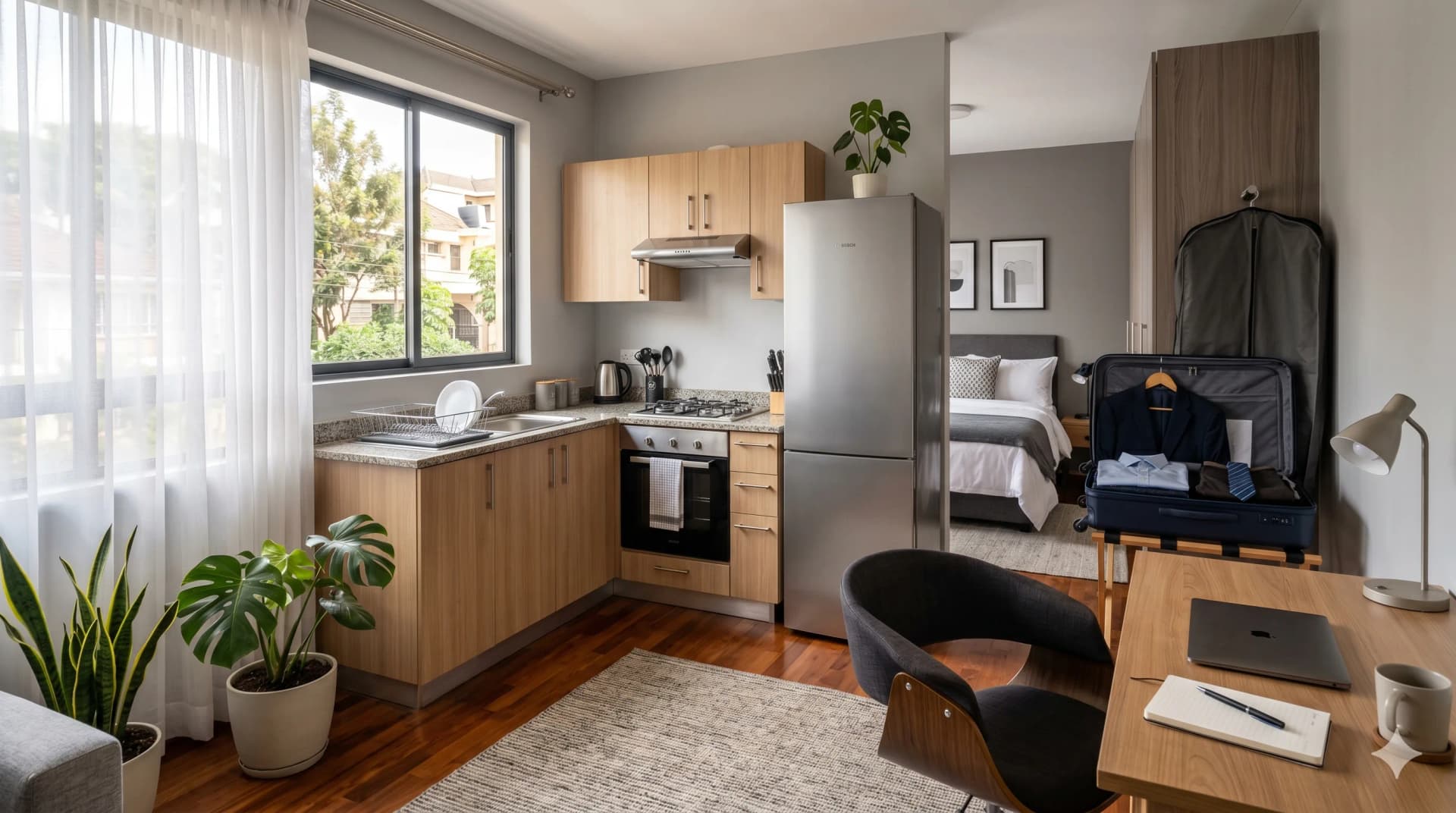
The $1,200–$1,500 monthly figure is accurate for a comfortable mid-range life — decent apartment, eating out regularly, Bolt for all your transport. What Tayo's post could not convey is what “really nice apartments” actually looks like here. Modern buildings in Kilimani and Westlands — rooftop pools, full gym, smart lock entry, 24-hour security, dedicated fibre — are comparable in fit and finish to what you would find in Lisbon or Berlin, not a discounted substitute for them. People who have come expecting generic emerging-market accommodation come out surprised. That surprise is worth naming because it changes how you budget and where you decide to base yourself.
The practical breakdown: a furnished one-bedroom in a well-maintained Kilimani building runs KES 90,000–150,000 per month (roughly $700–$1,150). Groceries from Chandarana or Carrefour are KES 8,000–15,000/month if you cook a few times a week. Bolt around the neighbourhood is KES 200–500 per trip. A sit-down dinner at a mid-range restaurant is KES 1,500–3,000.
Two costs that routinely catch new arrivals off guard: service charges on apartments (KES 3,000–10,000 per month on top of rent, covering security and building maintenance) and drinking water — Nairobi tap water is not suitable for drinking, so bottled delivery or a filtration service is a standing monthly line item. Neither is large, but both are invisible in most cost-of-living summaries.
The Network
Two weeks in and he had met founders, builders, and creators doing things worth talking about. This is the least generic of his five observations, and it is the one most worth interrogating.
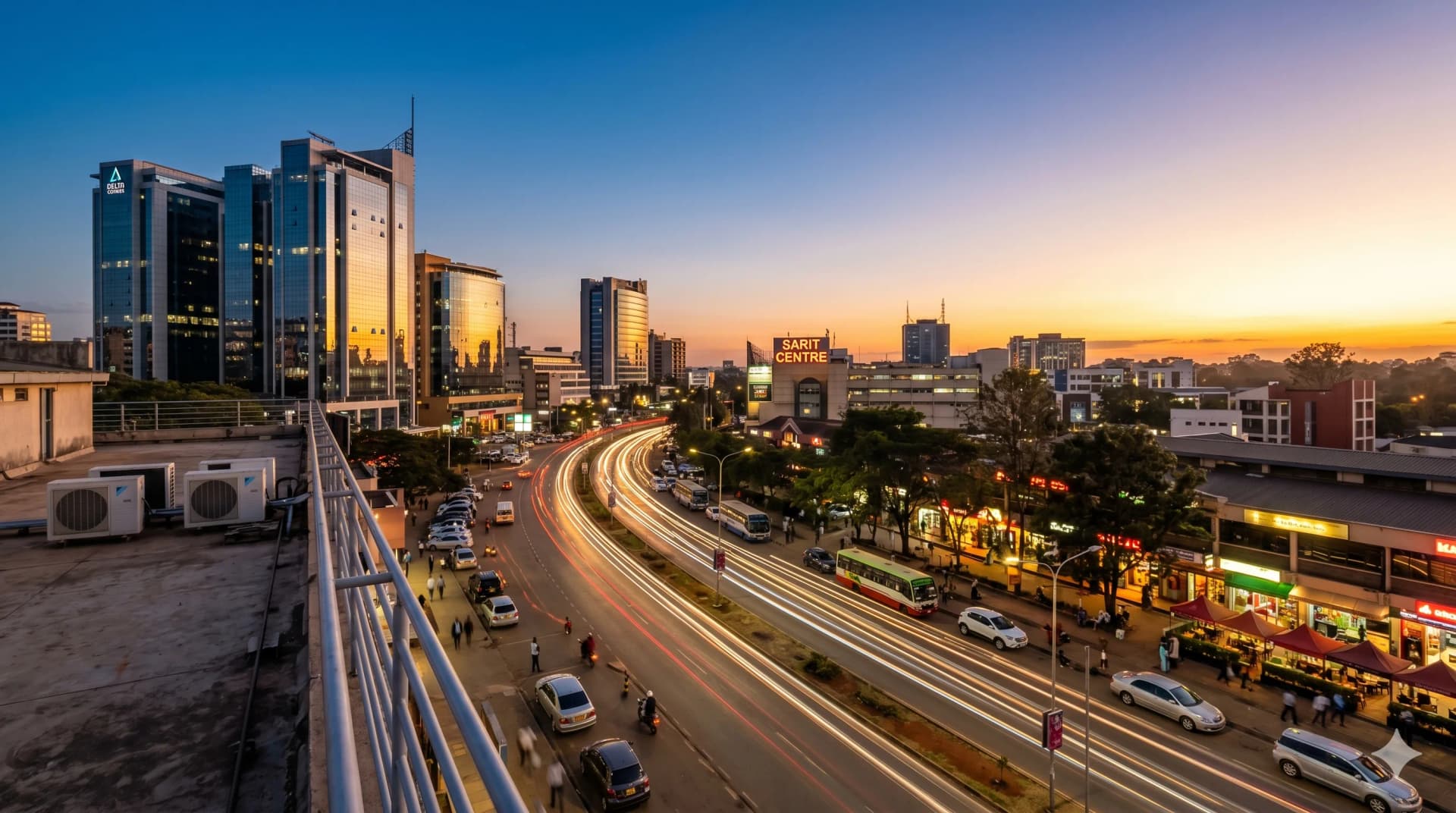
The Silicon Savannah label gets used loosely enough that it has started to mean nothing. The underlying infrastructure is real. iHub — the co-working and community space that has anchored East Africa's tech ecosystem since 2010 — moved to a new two-storey headquarters in Lavington in November 2024, a signal of continued commitment rather than a fading brand. Nairobi Garage operates five locations across the city, the largest co-working network in Africa by site count. Google, Microsoft, Meta, and AWS all have regional offices here. Startup Genome ranks Nairobi third in Africa for ecosystem value, with a 22% growth rate. The network is not ambient goodwill — it has address and infrastructure behind it.
The useful comparison for anyone coming from another African city is with Lagos. Lagos has a larger tech ecosystem by scale — bigger market, more capital, more sheer velocity. Nairobi has a livability advantage that Lagos does not. The framing that comes up consistently from founders who split time between both cities is: Lagos when you need market access and scale, Nairobi when you need to actually build something without the city fighting you at every turn. That distinction matters for people who spend their working day on a laptop and their evening in a restaurant that doesn't require a security sweep to enter.
Location
From JKIA you can reach Lagos, Johannesburg, Cairo, or Accra in three to five hours. Nairobi is the dominant East African aviation hub, and its geographic position makes it a practical base for anyone moving across the continent rather than staying fixed in one city. For founders who need to be in multiple markets, or nomads who want to use a few months in Kenya as a launchpad for regional travel, this is a genuine operational advantage — not just a nice thing to say on a map.
What the post did not have room for: Diani Beach is a 40-minute flight from JKIA. The Maasai Mara is 45 minutes by small aircraft. The Nairobi National Park — where lions and giraffes actually live — borders the city's southern edge. From certain vantage points in Kilimani on a clear evening, you can see the Ngong Hills on the horizon. No other city in the world with this density of tech infrastructure has a functioning game reserve as a near-neighbour. That is not a travel-brochure observation; it is a fact about what your weekend options look like from a base in this city.
The Weather
This one is undersold in short-form because the explanation is more useful than the claim. Nairobi does not have good weather because it got fortunate with a tropical location. It has good weather because it sits at 1,795 metres — 5,889 feet — above sea level. That elevation converts what would otherwise be a hot equatorial city into a year-round highland temperate climate: 20–27°C most of the year, low humidity, evenings in June and July that drop enough to warrant a light layer.
That is why apartments do not have air conditioning. It is not a design oversight or a cultural preference — it is climate physics. Bangkok, which competes with Nairobi on cost, runs 33–38°C with high humidity year-round and requires AC running continuously. Bali's lowlands are the same. Nairobi at altitude requires neither. For remote workers who spend eight hours a day indoors at a desk, working in a room with open windows and a 23°C breeze is meaningfully different from working in a sealed apartment with the AC set to 19 because anything else is uncomfortable.
What the Video Could Not Include
A post from someone two weeks into a stay is necessarily impressionistic. A few things worth knowing that did not fit in Tayo's five points:
Traffic is severe. A 4km journey during peak hours can take 30 minutes or more. Nairobi is a Bolt-dependent city — most residents in the expat neighbourhoods do not walk significant distances, they summon a car. This shapes your day in ways that are not obvious until you are living it: if your apartment is in Kilimani and your co-working space is in Westlands, build 15–25 minutes into that journey, more if you are leaving between 8 and 9am or 5 and 7pm.
The pattern that comes up consistently from people who have spent more than a few weeks here: short stays feel chaotic, longer stays reward. Nairobi is not a city that reveals itself to someone who is only half-committed to it. The integration period — getting a Safaricom SIM, understanding which supermarket has what, working out how to move around efficiently — takes time. People who commit to a month leave with a very different impression of the city than people who tried it for ten days and gave up. The network Tayo found in two weeks is real; the people who find it in three days are outliers.
Safety in the residential areas of Westlands, Kilimani, Kileleshwa, and Lavington is fine — gated buildings, security on-site, Bolt as the default transport mode. Walking alone at night on unlit streets outside those zones is a different situation. The city rewards a bit of local knowledge, not paranoia — but it is not one where you can ignore your surroundings entirely, particularly as a newcomer.
Where to Base Yourself
Most people working remotely for two weeks or more end up in Kilimani. Larger apartments for the same money as Westlands, a more residential character that makes a month-long stay feel like living rather than extended hotel occupancy, and enough restaurant and café variety to avoid routine without having to cross town for dinner. The Westlands co-working cluster requires a 10–15 minute Bolt from Kilimani, though Nairobi Garage has a Kilimani location at Pinetree Plaza on Kaburu Drive off Ngong Road if you want something closer on the mornings that matter.
The full practical picture — co-working spaces and what they charge, what internet connectivity to expect, visa requirements, monthly cost breakdown — is in the Nairobi digital nomad guide. If you are deciding between Kilimani and Westlands, the comparison goes into the specifics. The apartments that suit this kind of stay — furnished, fast Wi-Fi, self check-in, direct booking — are on the stays page.