

Why Nairobi Works for Remote Work
The case for Nairobi is not just that it is cheaper than London or Berlin — it is that the infrastructure actually functions. Fibre internet is widely available in the upper-middle residential areas of Westlands and Kilimani. Co-working spaces have been operating since 2010; the market has matured past the “shared desk in a living room” phase. Nairobi is UTC+3, which puts it on East African Time — afternoons line up with European mornings, and the working day can start at a reasonable hour before European clients are awake if you want the quiet hours for deep work.
The city also has a genuine tech community built around iHub, Nairobi Garage, and the east African startup ecosystem that has been running since the M-Pesa era. If you are in tech or fintech, the serendipitous conversations happen here in a way they do not in a beach-town co-working space.
The Two Neighbourhoods That Work
Most nomads land in one of two places: Westlands or Kilimani. They are 15 minutes apart by Bolt and serve different working styles.
Westlands is where you go if you want to walk out of your apartment and into a co-working space. Nairobi Garage, Jenga Leo, Ikigai, and Workify Africa are all within a roughly 15-minute walk of each other off the Muthithi Road–Ring Road corridor. The restaurant density is higher, the evenings go later, and the general energy is busier. If you work better surrounded by activity and want to eat out most nights, Westlands is easier.
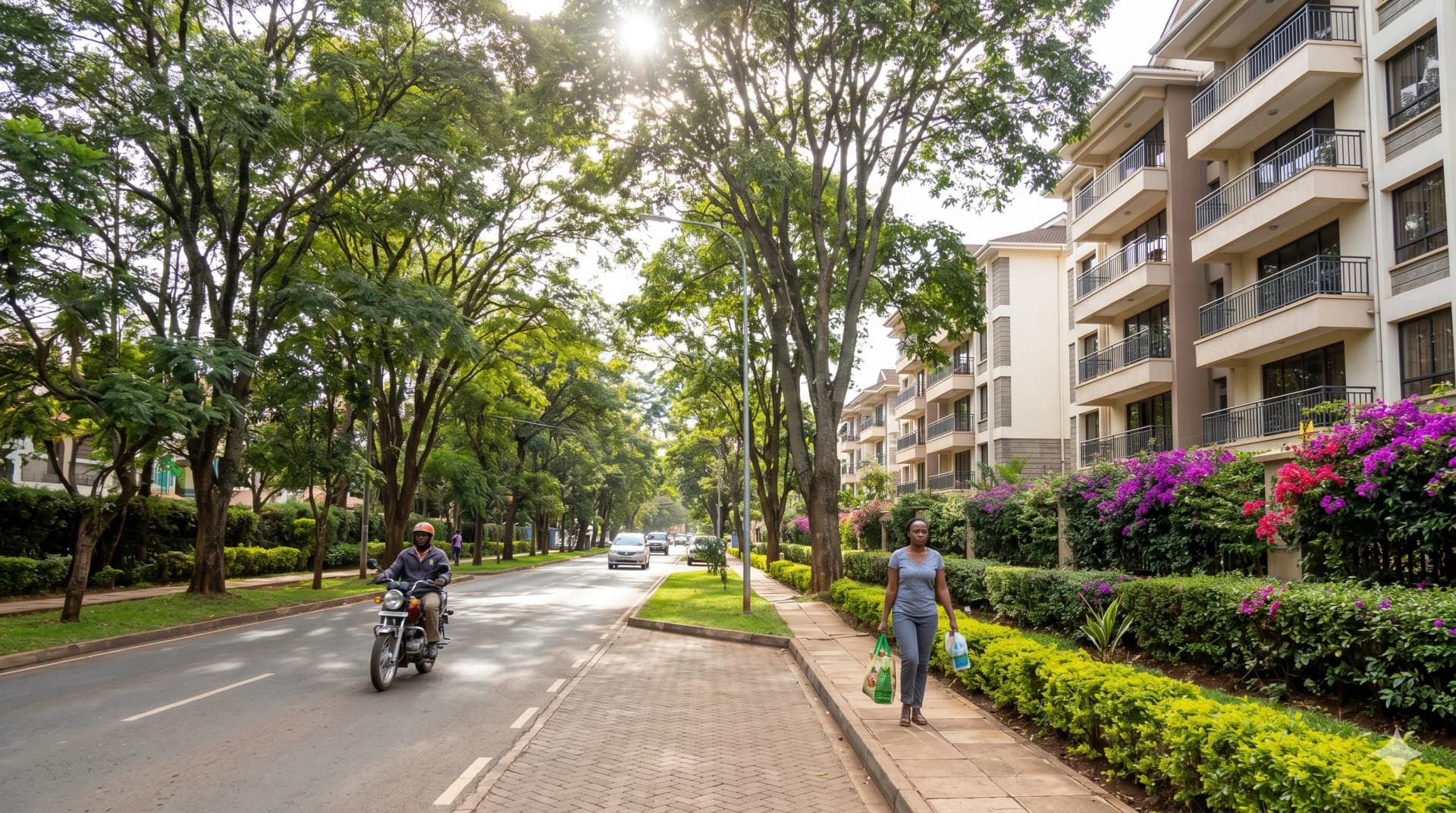
Kilimani is where you go if you want a proper home base. Quieter streets, larger apartments for the same money, and a residential character that makes a two-week or month-long stay feel less like hotel living. The trade-off is that most co-working requires a 10–15 minute Bolt to Westlands, though Nairobi Garage has a second location at Pinetree Plaza on Kaburu Drive off Ngong Road — closer for Kilimani-based guests. Many people who stay longer than two weeks end up in Kilimani regardless of where they initially thought they wanted to be.
Co-Working: What Exists and What It Costs
The Westlands cluster is the most practical starting point. Nairobi Garage at Delta Corner Annex, Ring Road Westlands (KES 1,500 + VAT per day) is the most established — reliable infrastructure, a proper community, and the kind of place where a connection over lunch turns into a referral six months later. Jenga Leo on Mpesi Lane off Muthithi Road runs the same KES 1,500 + VAT day rate and packs more amenities into the building: full gym, rooftop bar, podcast studio, spa. It is a good option if you want your co-working space and your afternoon decompression in the same location. Ikigai on Peponi Road (KES 2,000) takes a different approach — outdoor working areas, wellness programming, specialty coffee on-site. Better for people who work better with natural light and air than in a glass office tower. KOFISI at Keystone Park is the corporate end — 30,000 sq ft, meeting rooms, a rooftop café, and pricing that suits teams on project-based billing more than solo day-trippers. Workify Africa at ABC Place on Waiyaki Way (KES 1,200 + VAT) is the most affordable option in Westlands, women-owned, and professional without the premium pricing of the others.
For the tech and startup community specifically: iHub is at 154 James Gichuru Road in Lavington — between Kileleshwa and Kilimani, not part of the Westlands cluster. Day pass is KES 2,000 + VAT. The community there skews toward early-stage founders and developers building for East African markets. If that is your context, the conversations you have at iHub are worth more than the desk.
In Kilimani: Nairobi Garage Kilimani at Pinetree Plaza, Kaburu Drive off Ngong Road runs KES 1,500 + VAT, same as the Westlands flagship. Workify Africa also has a Kilimani location at 623 Wood Avenue Plaza.
Internet: What to Expect
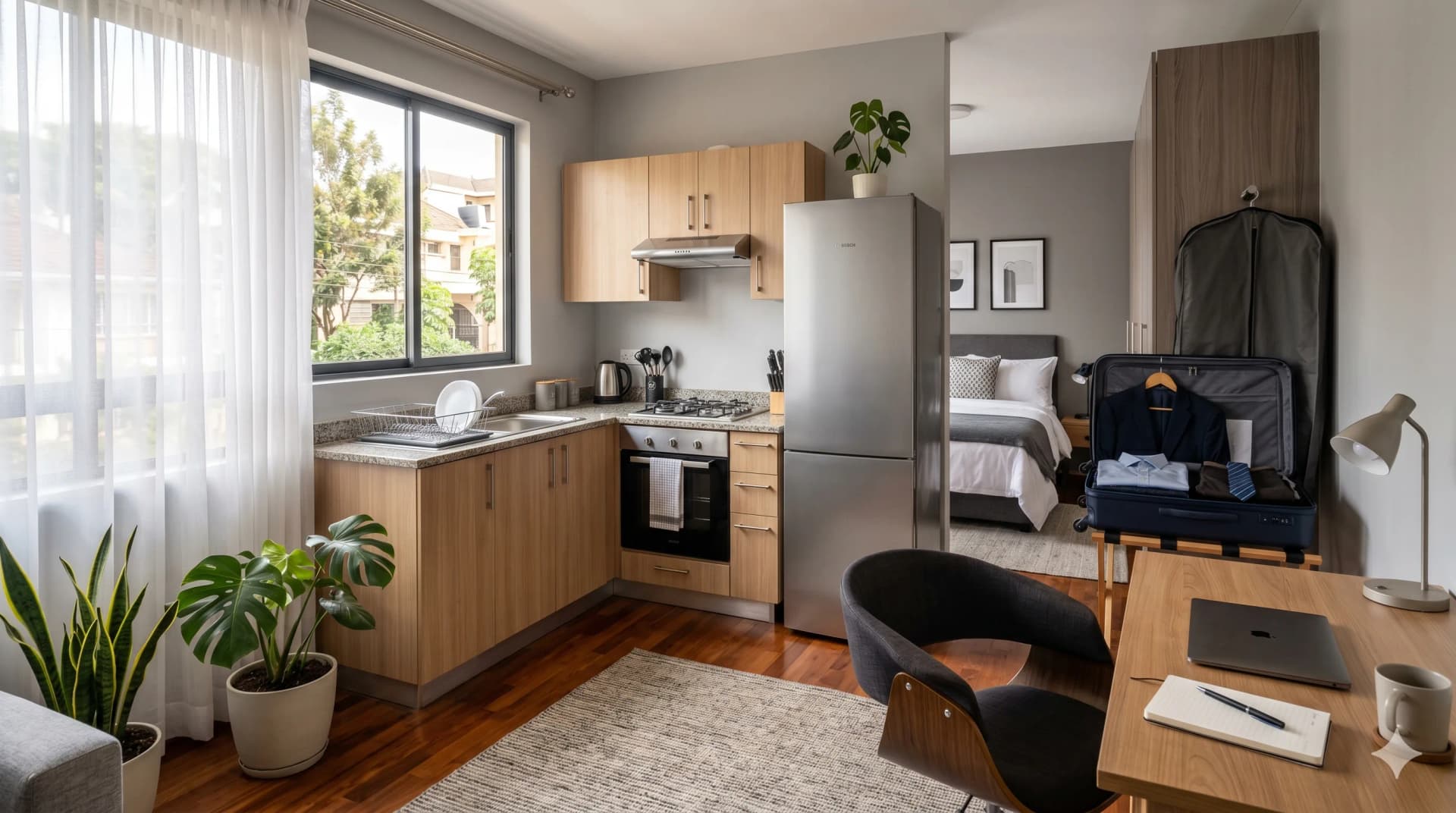
In well-managed furnished apartments, the connection is serious. Our properties run 100 Mbps+ mesh Wi-Fi — designed for video calls and VPN, not just browsing. The difference from a hotel or an Airbnb with a shared ISP connection is substantial under load. If you have a day of back-to-back client calls, connection quality is not a variable you want to be managing.
For a mobile backup: a Safaricom SIM with a data bundle is the standard option. Registration requires a Kenyan ID or passport and is done at Safaricom shops at Sarit Centre, Westgate, or any service centre. Safaricom's 5G network covers both Westlands and Kilimani reliably. M-Pesa is loaded onto the same SIM — useful for paying Bolt, buying groceries, and topping up your data.
Power cuts exist, though they have become less frequent with Nairobi's grid improvements. Most well-run apartment buildings have standby generators that come on within seconds of an outage. Ask about generator coverage before you book if power stability is critical to your work.
What You Need Before You Arrive
A few things are worth sorting before you land rather than after. Most nationalities enter Kenya visa-free for up to 90 days — confirm your specific passport situation at the Kenya Department of Immigration Services or your country's consulate before booking. For stays longer than 90 days, Kenya launched the Class N digital nomad visa in May 2025: valid for one to two years, renewable, and open to remote workers who can demonstrate annual income above USD 55,000. Applications go through the e-Citizen portal. If you are planning a stay of three months or more, this is the right route.
Health insurance that covers you in East Africa is worth confirming. Both Aga Khan Hospital in Parklands and Nairobi Hospital on Argwings Kodhek Road are private, excellent, and used to dealing with international patients and their insurers — but medical care in Kenya is pay-first, claim-later in most private facilities.
What a Month Costs
A furnished one-bedroom in Kilimani or Westlands runs roughly KES 90,000–150,000 per month depending on the building, the unit, and the season. You are getting full furniture, kitchen, fast internet, and typically pool and gym access in the building. Co-working, if you go three or four days a week, adds KES 18,000–25,000 at Nairobi Garage rates. Food varies enormously — KES 300–500 for a proper lunch at a local restaurant, KES 1,500–3,000 for a sit-down dinner somewhere like Ezo or Cedars, KES 800–1,200 for a week of basic groceries if you cook. Bolt within the two neighbourhoods costs KES 200–500 per trip.
The city is not Bangkok or Chiang Mai in terms of raw cost, but the value proposition is different: you get a serious city with serious infrastructure. If the work you do requires being in a real business environment — client meetings, proper meeting rooms, professional services — Nairobi delivers that at a fraction of the European equivalent.
Where to Base Yourself
The consistent preference for longer working stays — two weeks or more — is Kilimani. Larger apartments, quieter nights, better value per square metre, and enough restaurant and cafe variety to avoid routine without having to cross town. Our Kilimani properties are spread from the Yaya Centre corridor down to Denis Pritt Road and the Hurlingham end of the neighbourhood. Most have fast mesh Wi-Fi, full kitchens, and self check-in that doesn't require coordinating with anyone.
For shorter stays where co-working proximity matters and you want to be in the middle of things, our Westlands apartments at GTC on Westlands Road, Marina Bay on Sports Road, or Sunstone on General Mathenge Drive put you within a short walk or Bolt ride of the full co-working cluster. GTC has in-building food and commercial access; Marina Bay and Sunstone are quieter and better suited to people who want to switch off after the working day rather than extend it.
Some guests have asked about in-apartment monitors to complete the dedicated office setup — it is something we are working on. In the meantime, Jenga Leo and KOFISI both have properly equipped workstations if you need a full screen for an intensive day.