
Skip the CBD
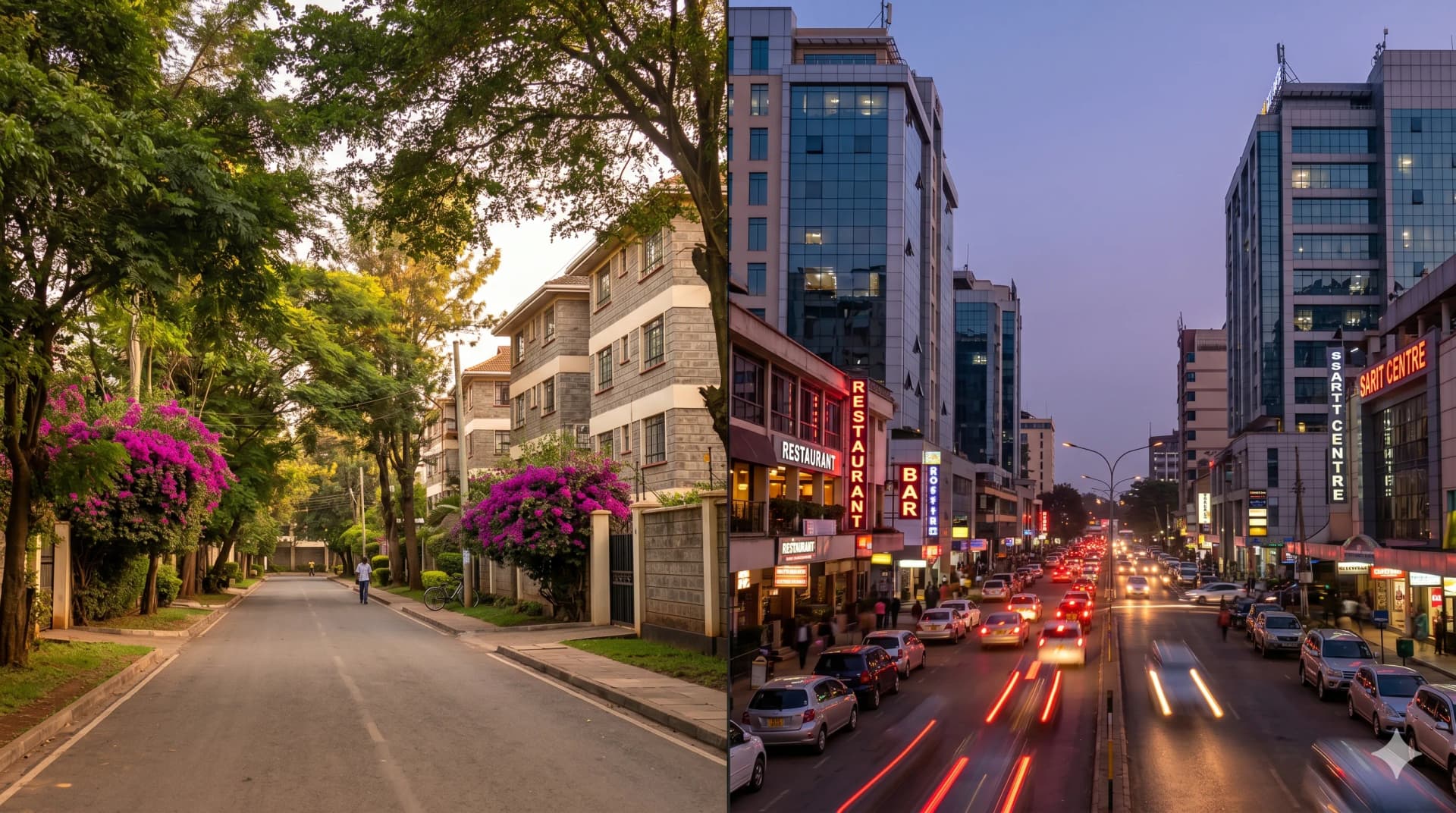
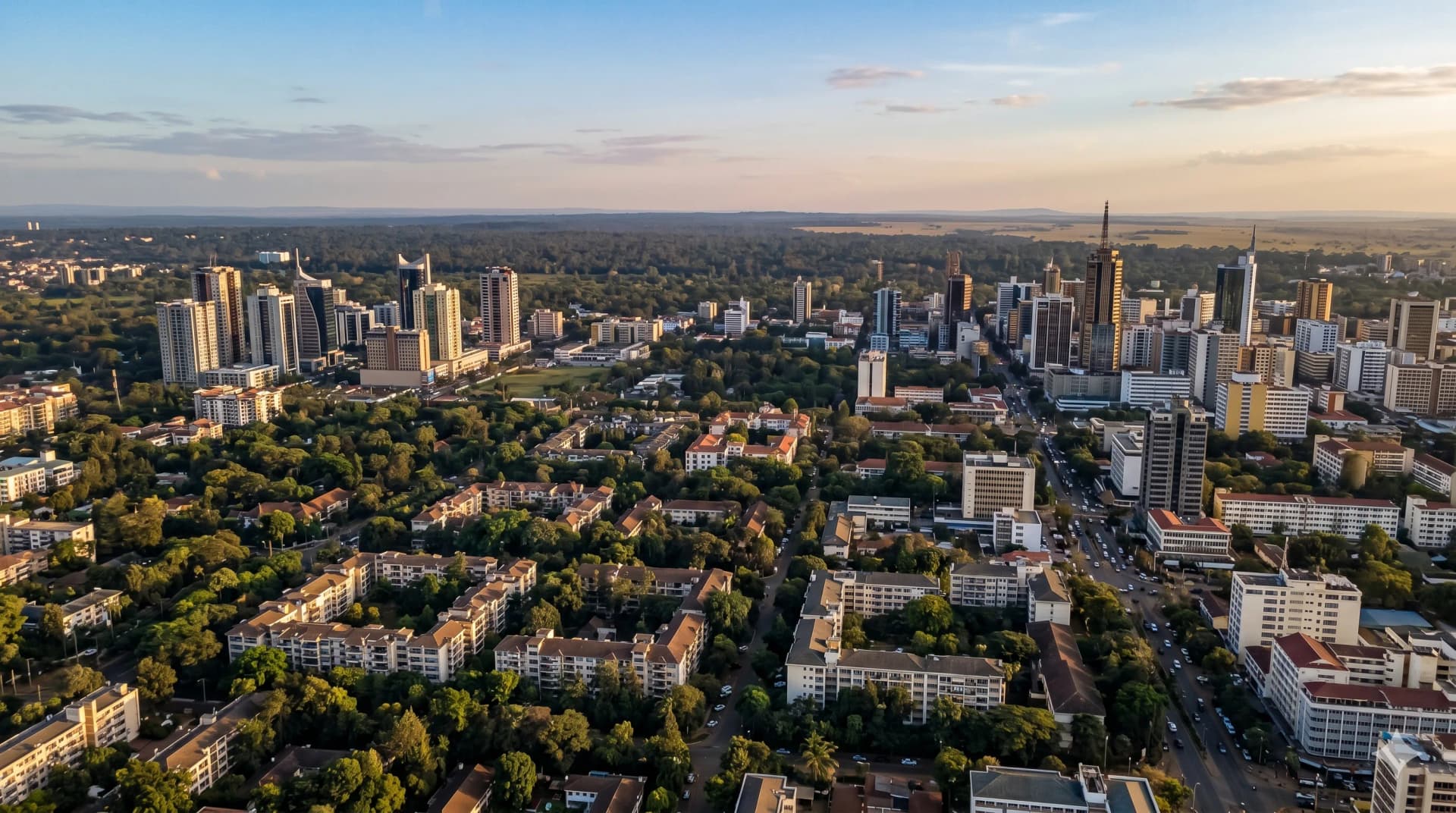
Most international first-timers ask about the CBD or book something near it on instinct — central equals convenient, the thinking goes. In Nairobi it does not work that way. The Central Business District is where people work, not where they stay. Dining options thin out after 7pm. Traffic from JKIA is worse than it is from the residential areas. And the mid-range hotels in the CBD are expensive relative to what a furnished apartment in Kilimani or Westlands gives you for the same money.
The neighbourhoods below are 15–35 minutes from JKIA via the Expressway (Westlands, traffic-dependent) or 25–45 minutes via Ngong Road (Kilimani, Kileleshwa, Riverside), and 15–25 minutes from the CBD depending on traffic. They are the part of Nairobi where the city is actually comfortable to live in.
Kilimani: The Default Recommendation
If you do not have a specific reason to be anywhere else, start here. Kilimani sits south of the CBD, bounded by Ngong Road and Argwings Kodhek Road. It is residential without being remote: Yaya Centre and Prestige Plaza are within walking distance for groceries and coffee, Nairobi Hospital is on the main arterial road, and the restaurant scene on Denis Pritt Road and around Prestige Plaza is dense enough that you will not exhaust it in a week.
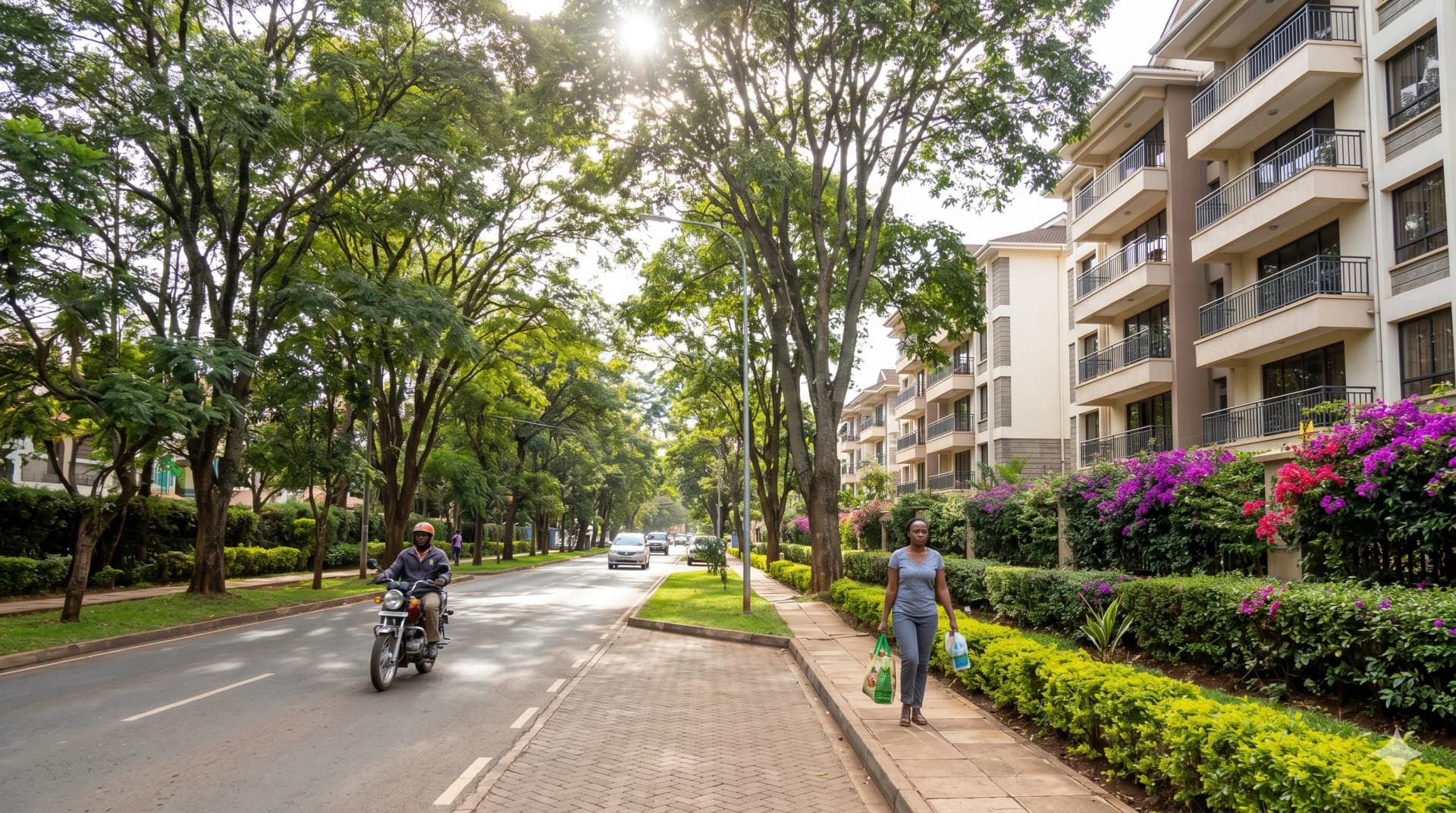
The neighbourhood suits a wide range of guests precisely because it does not specialise. It is quiet enough for families and light sleepers, central enough for business travel, and well-stocked enough for people who want to self-cater some meals. The price per square metre is lower than Westlands, which means the apartments are larger for the same outlay. Most stays of a week or more end up here.
Read the full Kilimani neighbourhood guide before you book.
Westlands: If You Want to Walk Out and Be Somewhere
Westlands makes the most sense for short stays — three to five nights — where the priority is eating out, the occasional co-working day, and not spending time in transit. The restaurant concentration on and around Muthithi Road is the highest in the city. Sarit Centre and Westgate are both walkable. The Nairobi Expressway interchange puts JKIA 15–35 minutes away (traffic-dependent), which matters when you are catching a connection.
The trade-off is noise. Woodvale Grove is Nairobi's main nightlife corridor and runs until 2–4am on weekend nights. If you need quiet on a Friday or Saturday, check where your apartment sits relative to the commercial strip. The residential edges of Westlands — Peponi Road, General Mathenge Drive — are substantially calmer than the core.
Read the full Westlands neighbourhood guide for a complete picture.
Kileleshwa: Quieter, Between the Two
Kileleshwa sits between Westlands and Kilimani — leafier, lower-rise, and genuinely residential. It is not the first recommendation for a three-night business trip, but for guests who want calm streets, a 24-hour Quickmart within walking distance on Mandera Road, and easy access to both Yaya Centre (10 minutes south) and Westlands (10 minutes north), it is a strong choice. Families who want a neighbourhood feel rather than a hotel feel often end up here.
Read the full Kileleshwa neighbourhood guide.
Riverside: For Guests Who Want Space
Riverside Drive runs along the western edge of the city, between the CBD and Westlands, in a low-density corridor that is genuinely unlike the rest of Nairobi. The buildings are spread out, the streets are quiet, and the Nairobi Arboretum is walkable. Merchant Square at the Chiromo Road end has good restaurants — Fogo Gaucho, Botanica, Le Grenier à Pain — and a Chandarana supermarket at Riverside Square. It is not a neighbourhood you drift through; it is one you choose deliberately, usually because you want space and calm without being far from the city.
Read the full Riverside neighbourhood guide.
How to Choose
The length of the stay and the type of trip are the most useful filters. A short business visit with evening meals and a need to move efficiently — Westlands. A longer stay where settling in matters more than walking distance to a bar — Kilimani. Travelling with family or prioritising quiet over convenience — Kileleshwa or Riverside. On a tighter budget and happy to self-cater — Kilimani gives the most apartment for the money.
The one comparison that covers both top options in detail is the Kilimani vs Westlands guide — worth reading if you are still deciding.
A Few Things Worth Knowing Before You Arrive
Getting from JKIA: Bolt and Uber both operate from the arrivals area. Agree on a rate with a cab driver or use the app — most guests use the app. JKIA to Westlands by Bolt costs KES 1,200–2,000 depending on time. To Kilimani, KES 1,500–2,500. An M-Pesa or international card on your phone app makes payment seamless.
SIM card: Safaricom SIMs are available at the airport on arrival and at shops inside Sarit Centre, Westgate, and Yaya Centre. Registration requires your passport. A Safaricom SIM also gives you M-Pesa, which is how Bolt drivers prefer to be paid and how most local purchases work.
Power: Outages happen, scheduled and unscheduled — Kenya Power (KPLC) posts scheduled cuts on X at @KenyaPower_Care. Well-managed apartment buildings have standby generators that come on within seconds. Bring a UK three-pin plug adaptor if your devices use EU or US sockets.
Medical: Nairobi Hospital (Argwings Kodhek Road, Kilimani) and Aga Khan University Hospital (Parklands, near Westlands) are both private, excellent, and accustomed to international patients. Have travel insurance that covers medical evacuation if you are staying more than a week.