
The Fee Problem
On October 27, 2025, Airbnb changed its fee structure for all property managers using a PMS. The old model — where guests paid a visible 14–16% service fee on top of the nightly rate — was replaced with a host-only model: the host now pays 15.5% of the total booking value to Airbnb, and the guest sees a cleaner price with no service fee line item. The fee did not disappear. It moved.
On a KES 10,000/night apartment for seven nights — KES 70,000 — the host pays Airbnb approximately KES 10,850 before the money reaches them. To cover that cost and maintain margin, the Airbnb listing price has to be set higher than the operator's actual rate. A direct booking at the operator's underlying rate is cheaper for the guest and more profitable for the operator. The guest just cannot see the arithmetic in the Airbnb fee breakdown the way they used to.
Most guests who have stayed at Shammy Homes properties more than once book direct the second time. Some book direct the first time after finding the listing on Airbnb and checking whether a direct option exists. That is not a leak in the Airbnb model — it is how the direct booking industry has always worked.
What Actually Changes with Direct Booking
The price: Under Airbnb's current host-only model, the listing rate has to cover the 15.5% commission — the operator prices it in. A direct booking at the operator's actual rate is cheaper for the guest. We show the same apartment at a lower rate on shammyhomes.com than on Airbnb precisely because we are not paying 15.5% of it to a platform.
Communication: Direct. You are dealing with the operator, not routing through a platform inbox with support ticket logic and automated responses. If something needs to be sorted — an early check-in, a broken appliance, a changed date — it gets sorted by the person responsible rather than a platform intermediary.
Flexibility: Operators can accommodate requests that Airbnb's booking system does not handle well — extended stays that run beyond the original checkout, mid-stay upgrades, corporate invoicing requirements, M-Pesa payment, splitting a stay across two units in the same building. These all require a direct relationship.
Invoicing: Organisations that need a formal invoice from a Kenya-registered entity for expense reimbursement cannot always get what they need from an Airbnb receipt, which issues in Airbnb's name. Direct booking with a registered operator produces the right documentation.
What Stays the Same
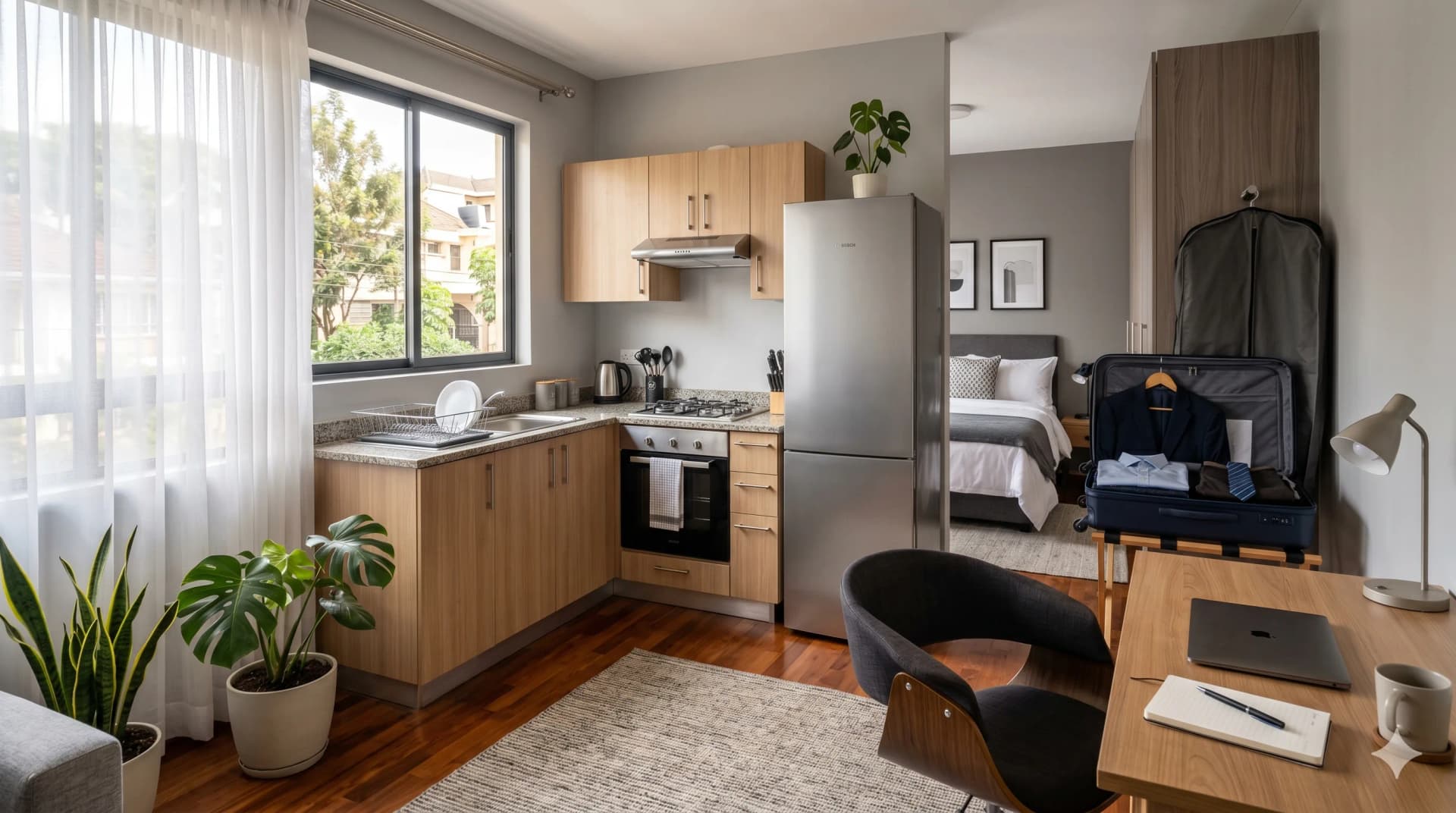
The apartment. The same unit, the same furniture, the same Wi-Fi, the same smart lock check-in. The property is identical regardless of which channel you booked through. The only difference is whether Airbnb is sitting between you and the operator, taking a cut.
What you lose by booking direct is Airbnb's dispute resolution and AirCover insurance. These matter more when you are booking an unknown property from an unknown individual. With a managed operator you can verify — a real company with a real website, real reviews you can cross-reference, and direct accountability — the insurance value is lower. You are relying on the operator's reputation rather than a platform guarantee.
The honest version: Airbnb is better when you are uncertain about the operator. Direct booking is better when you are not.
How to Verify an Operator Before Booking Direct
The things worth checking: a real domain name and website with contact details, Google Maps presence for the property address, reviews that exist across more than one platform, and a payment system that is formal — M-Pesa Paybill, card via a payment gateway like Paystack, or bank transfer to a named account. Operators who ask for cash on arrival or payment via personal mobile number are a different category of risk.
For Shammy Homes specifically: all properties are bookable at shammyhomes.com. Payment options include M-Pesa and card. Smart lock check-in is confirmed on booking. All properties are in managed buildings with security and maintenance infrastructure. The Airbnb listings for the same properties exist and carry reviews if you want to cross-reference.
Booking.com and Other Platforms
Airbnb is not the only OTA active in Nairobi. Booking.com charges hosts a commission of 10–17% per booking and is used by some Nairobi operators as a secondary channel. Both platforms now operate on host-side commissions — the platform cost is embedded in the listing rate rather than shown as a guest-facing service fee. The direct booking argument applies equally to both: contact the operator directly and the platform cost is removed from the equation.
Most Nairobi operators are reachable via their own website or WhatsApp. If you found a property on any OTA and want to rebook, a direct message to the operator is the right first step.
Extended Stays and Repeat Bookings
The economics compound across multiple stays. A guest who books four seven-night stays across a year via Airbnb is paying the 15.5% platform cost each time, embedded in a listing rate that has to cover it. The same four bookings made direct are at the operator's actual rate — lower each time. Operators who work with repeat guests also tend to give better availability, more flexibility on dates, and for guests who book consistently, rates that are not available on any platform.
The platform is most useful once — for discovery. After that, it is overhead.